
Is Using AI Cheating or Just Smart Business?
Artificial Intelligence has been stirring up debates everywhere — in schools, workplaces, creative studios, and even online communities. People ask: “If I use AI to help me, am I cheating?”
Let’s unpack that.
AI in Business: Results Matter Most
In the business world, the method is often secondary to the outcome. Companies don’t usually care whether a task was done manually or with AI — they care about efficiency, accuracy, and results.
Think of it like math class. You could solve a problem using a traditional formula, a shortcut, or even a calculator. As long as you get the correct answer, you’ve succeeded. AI in business works the same way — it’s a tool to reach results faster, smarter, and often cheaper.

When AI Feels Like “Cheating”
The sentiment changes when it comes to art and creative expression.
- True artistic value comes from the time, effort, and emotions poured into a piece. Every brushstroke or design decision reflects the artist’s skill and vision.
- AI-generated art, on the other hand, relies on references from countless existing works. While impressive, it lacks the personal touch that gives traditional art its emotional and monetary value.
- Selling AI-generated art as entirely your own can raise ethical questions — whose work is it really based on?
That said, AI can be a helpful assistant for creatives to Quickly mock up concepts or ideas and Experiment with styles without committing hours
For those without design skills, AI can still be a helpful tool for branding, social media, and creating visuals quickly. But if your goal is authentic artistic expression, relying solely on AI may feel like a shortcut that diminishes value.
AI and Copyright: Who Owns the Work?
One of the biggest debates around AI is copyright and ownership. When an AI generates art, writing, or music, it’s technically creating content based on patterns it learned from countless existing works — many of which are copyrighted.
This raises tricky questions:
Can you claim the output as entirely your own? Do the original creators deserve credit? And who is legally responsible if that content infringes on someone else’s work?
Currently, copyright laws haven’t fully caught up with AI, leaving a gray area that’s debated worldwide. For businesses, this means you need to be cautious: using AI-generated content for branding or marketing without verifying originality could lead to legal trouble.
For artists and creators, it’s a reminder that AI should be a tool to inspire or accelerate your work, not a replacement for your own intellectual property. The key is transparency, responsible use, and combining AI with your unique human input to create something legally and ethically sound.

AI in Education: A Gray Area
Universities are grappling with AI as well. Some penalize students for using AI in essays or projects, arguing that it undermines learning. Others see it as a chance to adapt, pushing students to learn how to query AI effectively and make it work for them.
The debate often comes down to:
- Are students learning the underlying skills?
- Are they using AI as a supplement or as a replacement?
In reality, learning to use AI intelligently is a valuable skill in itself, and arguably, it’s preparing students for a workplace that increasingly relies on AI-driven tools.
AI should enhance learning, not replace it. For example:
- Use AI to summarize research, but analyze it yourself
Draft a report with AI, but add your insights and critique

AI is the Smart, Not Lazy
As AI technology continues to improve, businesses and individuals are realizing its potential:
- Faster production: From content creation to design, AI speeds up repetitive or time-consuming tasks.
- Cost efficiency: AI reduces labor costs while maintaining quality.
- Scalability: Tasks that would take hours can now be automated, allowing you to focus on higher-level strategy.
Using AI isn’t about taking the easy way out — it’s about working smarter, not harder. Any business aiming to survive and thrive in 2025 and beyond will embrace AI to increase productivity, reduce costs, and remain competitive.
Where the Line is Drawn
- Cheating: When AI is used to bypass skill development or misrepresent original work. Examples: submitting AI-generated essays as your own in school, or selling AI art without disclosure.
- Smart Business: When AI is used to enhance your capabilities, automate repetitive tasks, and free up time for creativity, strategy, and growth. Examples: automating social media posts, generating reports, or designing graphics to enhance branding.
Ultimately, AI is a tool — not a replacement for skill or ethics. The value lies in how you use it responsibly.
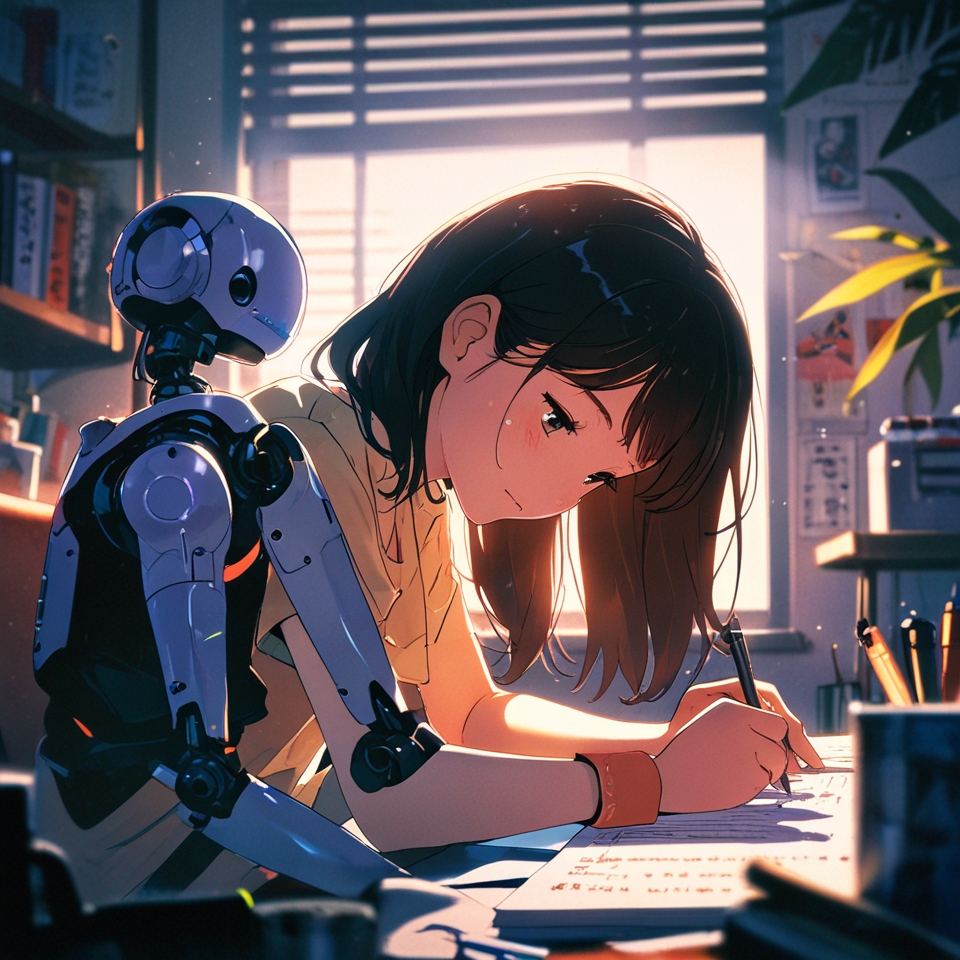
The Human + AI Partnership
The best results come from collaboration:
- AI generates options → You evaluate and select
- AI drafts content → You add context, personality, and polish
- AI analyzes data → You make strategic decisions
AI amplifies human creativity and productivity — it’s a co-pilot, not a replacement.
My Take
I believe that using AI for business is not cheating — it’s strategic thinking. Every business wants to optimize efficiency, cut unnecessary costs, and scale faster. Ignoring AI would be like refusing to use email, spreadsheets, or the internet when it became mainstream.
For artists and creatives, the decision is more personal. It’s about what you value — the process, the originality, or the speed. If you prioritize mastery and expression, AI should supplement your work, not replace it.
Conclusion
AI is here to stay. Whether you see it as a tool, a threat, or a cheat code depends on context, ethics, and your goals.
The key takeaway: use AI intentionally, ethically, and creatively. Don’t fear it — embrace it, but also respect the craft, the skills, and the learning that make human work unique.
Want more insights on using AI to build a business or start a passive income stream? Check out AI Stack — a curated directory of AI tools organized by business operations. From marketing and content creation to automation and analytics, it’s everything entrepreneurs and creators need in one place.
Leave a Reply