
What Is Agentic AI? Key Benefits, Use Cases, and the Future of Autonomous AI Agents
Agentic AI is a new generation of artificial intelligence designed to serve as a digital team member, taking proactive action rather than merely following direct commands.
While most AI tools currently wait for human input, agentic AI understands broad objectives, independently makes decisions, and manages multi-step processes from start to finish with minimal human intervention.
Example:
Consider organizing your digital photo library. A traditional AI might retrieve all the cat photos if you ask:
“Retrieve all the Cat Photo from the photo library in drive”
By contrast, agentic AI grasps your high-level aim (“organize my photos”), determines specific needed tasks (like sorting, deduplicating, and rating images), and then executes them. It might even recommend creating albums or backing up favorites all on its own.
In business, agentic AI goes further than older chatbots.
For example,
In online retail, basic AI might only answer customer questions.
Agentic AI, however, can manage inventory, reorder products, set up sales prices, and update listings automatically.
Its proactive ability makes business operations smoother and more responsive to market shifts.
A recent Dynatrace report reveals that 50% of enterprises now have agentic AI projects in production for limited use cases, with 44% expanding across departments to manage workflows autonomously (Dynatrace).
Businesses are rapidly recognizing the efficiency and innovation unlocked by AI that acts with initiative and autonomy.
Whether you’re a student, entrepreneur, or tech enthusiast, getting to know agentic AI now is essential. It’s shaping the future of work and industry.

How Agentic AI Differs from Traditional AI
Although many people think of all AI as similar, there are important distinctions between traditional AI, generative AI, and agentic AI. Recognizing these differences helps you select the right solution.
Traditional AI is rule-based and reactive.
Think of it as a calculator or automated data extractor that follows precise instructions. For instance, it might extract values from invoices but makes no decisions on your behalf.
Generative AI creates new content text, images, music when you prompt it.
ChatGPT or Midjourney fall into this camp:
they respond creatively after you make a request, but don’t initiate actions.
Agentic AI is proactive and goal-driven. Set an objective, and agentic AI determines next steps, adapts to new situations, and acts autonomously to reach your desired outcome.
In banking, for example, traditional AI might flag suspicious transactions, while agentic AI could uncover new fraud schemes, coordinate investigations across systems, and recommend prevention strategies.
Key comparison points:
| Feature | Traditional AI | Generative AI | Agentic AI |
|---|
| Core function | Follows rules | Creates content | Achieves goals autonomously |
| User’s role | Supervisor | Prompt giver | Goal setter |
| Adaptability | Low | Moderate | High |
| Autonomy | Minimal | Some | High |
| Learning | Static | Some updating | Constant, real time |
Summary:
- Traditional AI reacts via rules without decisions.
- Generative AI creates content on prompt but stays passive.
- Agentic AI proactively pursues goals, adapting and acting autonomously
A major advantage is workflow automation. Gartner forecasts that 40% of enterprise applications will integrate agentic AI by 2026 to manage workflows autonomously (Flowdevs).
When evaluating AI options, ask yourself:
Do you need a tool for a single task,
Or
a “digital team member” that autonomously manages, adapts, and optimizes entire processes?

Core Characteristics of Agentic AI
Agentic AI distinguishes itself through a combination of capabilities that make it function more like a human colleague than a simple tool.
1. Autonomy
Agentic AI doesn’t require step-by-step direction.
It manages multi-step assignments independently, such as generating business reports or running marketing campaigns.
2. Goal Orientation
It understands and pursues high-level objectives. If tasked with “improving customer satisfaction,” it independently selects steps enhancing support, personalizing outreach, and collecting feedback.
3. Contextual Decision-Making
It considers context, environment, and history when making decisions.
For example,
it won’t repeat failed strategies by learning from past outcomes.
4. Adaptability
Agentic AI continuously refines itself based on performance.
Successful campaigns shape future actions, and missteps inform future avoidance.
5. Interactivity & Tool Use
It efficiently connects with external tools, databases, and other AIs.
For instance, it might gather information from a CRM, update spreadsheets, or coordinate meeting schedules autonomously.
A healthcare example:
agentic AI can oversee patient records > prioritize urgent cases > schedule follow-ups> alert doctors to important changes and propose new treatment options all with minimal manual oversight.
Deloitte reports organizations using agentic AI see double-digit improvements in cost and customer satisfaction metrics for support workflows (Deloitte).
To maximize value, look for these five traits in any agentic AI solution you consider.
The Architecture of Agentic AI Systems
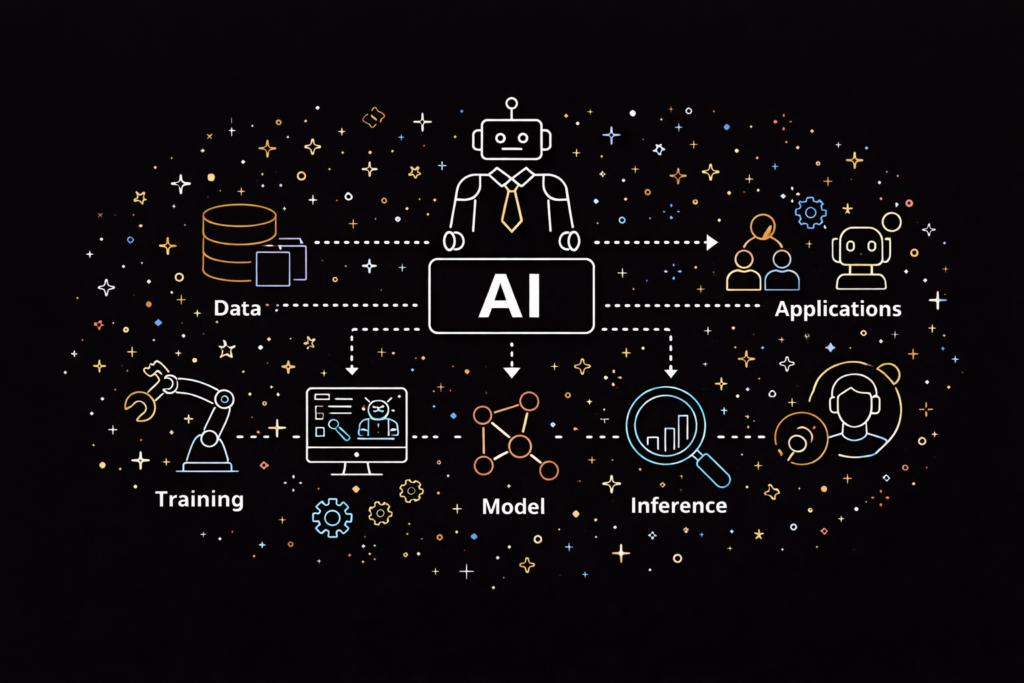
Agentic AI is much more than an advanced chatbot; it’s built from several modular components that collectively enable learning, decision-making, and action.
1. Perception Module
This “senses” the environment, processing inputs such as text, images, or sensor data. It might read emails, analyze documents, or monitor user activity.
2. Planning Engine
Using information from perception, it decomposes goals into individual tasks, selects optimal steps, and organizes workflow execution.
3. Memory Architectures
It consistently records past activity, learning from successes and failures for improved continuity and context-aware action.
4. Tool-Use Interfaces
Agentic AI seamlessly connects to APIs, databases, and business tools, enabling it to execute tasks like sending emails, updating records, or automating purchases.
5. Learning Mechanisms
With reinforcement learning and adaptive algorithms, agentic AI iteratively enhances its performance, continually updating its strategies.
In e-commerce, for instance, agentic AI links inventory systems, CRM tools, and shipping software, automatically restocking products, updating listings, and launching marketing campaigns on its own.
IBM found enterprises using agentic AI architectures saw a five-fold rise in operational efficiency over those with legacy AI (IBM).
Choose solutions with modular, interoperable architecture to future-proof your investments.

Key Applications and Real-World Case Studies
Agentic AI is already delivering measurable results across industries.
Here are some examples:
Healthcare
Automates triage, monitors patients, and coordinates interdisciplinary care.
At a leading US hospital, agentic AI prioritized emergency patients and reduced wait times by 30%, freeing staff for urgent cases.
Retail
Optimizes supply chains, personalizes recommendations, and automates campaigns.
JP Morgan Chase increased cross-sell revenue by 35% using AI to analyze customer data and suggest complementary financial products in real time (SuperAGI).
Financial Services
Streamlines compliance, detects fraud, and shortens loan approval cycles.
One fintech, Hero FinCorp, slashed two-wheeler loan approvals from 2 days to 30 minutes using agentic AI from Salesforce Agentforce, cutting handoffs by 75% and errors by 37% (Salesforce).
Enterprise Help Desk
Automates routine support, escalates complex issues, and learns from interactions.
A SaaS provider offloaded 70% of simple requests to agentic AI, allowing human agents to focus on higher-value work.
AWS-sponsored IDC research shows 65% of enterprises anticipate full agentic AI deployment by 2027, building on current momentum where 50% already operate 10+ production agents for routine workflows (AWS).
This technology is ideal for businesses with repetitive, multi-step processes.
Agentic AI in Business: Opportunities and Challenges
Agentic AI offers significant advantages for companies, but there are important considerations to address.
Opportunities
Operational Efficiency: Automates multi-step workflows, freeing employees for creative or strategic tasks such as supply chain management or compliance monitoring.
Personalization: Analyzes customer data to deliver scalable, tailor-made experiences that improve loyalty and satisfaction.
Scalability: Handles heavy workloads without increasing headcount, supporting rapid growth and streamlined operations.
Continuous Improvement: Learns from every interaction, providing compounding gains in performance and process quality.
Challenges
Oversight and Trust: Ensuring AI aligns with company values and regulations requires monitoring, transparency, and accountability.
Data Security: Connecting multiple systems poses new data privacy challenges. Information security becomes paramount.
Skill Gaps: Success with agentic AI demands upskilling employees for oversight, data analysis, and system integration.
For example,
a logistics startup saved 15% on fuel by optimizing delivery routes with agentic AI but needed strong monitoring tools to maintain regulatory compliance.
IBM’s latest executive survey shows 95% view trust in autonomous AI as critical for product success, while 89% of consumers reject brands hiding AI usage—making trust the key adoption challenge (IBM).
Balancing powerful automation with solid governance and workforce training is crucial.
Building Blocks: Frameworks and Tools
Today, accessible frameworks and platforms make it possible for startups, students, and established companies to get started with agentic AI with no extensive technical expertise required.
Open-Source Frameworks
Projects like LangChain and AutoGen provide modular components to build agentic AI workflows connecting models, databases, and tools for automated action.
Cloud Platforms
AWS, Azure, and Google Cloud offer agentic AI services, harnessing scalable infrastructure, built-in security, and pre-made integrations so you can deploy solutions rapidly.
Specialized Tools
Industry-focused products like Exabeam (for security), IBM Watson, and NVIDIA’s agentic kits offer ready-made, sector-specific modules compatible with common business software.
For example,
a US e-commerce startup built an agentic assistant using LangChain to manage inventory, send restock alerts, and update Amazon, Shopify, and Walmart listings automatically preventing stockouts and keeping all channels current.
Gartner predicts agentic AI will automate 75% of routine enterprise tasks by 2028, freeing workers for higher-value work (Flowdevs).
Explore open-source projects and free trial tiers if you’re just starting.

The Future of Agentic AI
Agentic AI’s trajectory points toward even deeper transformation of business and work over the next decade.
Multi-Agent Collaboration
Specialist AI agents will soon collaborate across complex projects: one managing product design, another marketing, others for supply chain and service, all coordinating like high-performing human teams.
Human-AI Symbiosis
The best organizations will pair human creativity and decision-making with AI’s speed and accuracy.
People set goals and provide guidance, while agentic systems execute and optimize demanding processes.
New Business Models
“AI-native” companies, staffed by small human teams and robust digital workforces, will rapidly launch products, serve customers, and manage growth at volumes previously unimaginable.
A San Francisco marketing agency already deploys more agentic AI agents than humans, using them to run client campaigns, spot trends, and even draft creative briefs enabling faster, smarter service.
Forrester predicts generative AI will grow 36% annually through 2030, dominating 55% of the AI software market as businesses embed agentic systems at their core (Forrester).
Those who learn to leverage agentic AI today will lead the next business evolution.
Conclusion
Key takeaways:
Agentic AI signals a leap from task-based automation to autonomous, goal-driven assistants.
Businesses already benefit through greater efficiency, speed, and adaptability across operations, marketing, finance, and support.
Success with agentic AI comes from knowing its core features, using the right frameworks, and preparing teams for new roles in oversight and collaboration.
Your next steps:
1. Try hands-on work with open-source frameworks like LangChain and AutoGen. Find Other AI tools in this curated AI Stack.
2. Identify repetitive, multi-step tasks in your workflow that could be automated.
3. Stay informed on responsible AI practices, emphasizing transparency and security. Read More about What is AI and the History of AI.
Agentic AI is shaping today’s workplaces. Now is the time to experiment, learn, and position yourself and your business for the future.
FAQ
What does “agentic” mean in agentic AI?
“Agentic” refers to an AI system acting on its own as an agent, making decisions and taking action to achieve goals without needing step-by-step instructions from a human. Basically, it means the AI is proactive, not just reactive.
How is agentic AI different from regular AI?
Regular or traditional AI follows specific instructions and focuses on single tasks. Agentic AI, on the other hand, sets its own steps to achieve a broad goal, working more like a teammate or assistant that plans and adapts on its own.
Do I need to be a programmer to use agentic AI tools?
No. Many modern agentic AI tools and platforms are user-friendly and designed for people with little or no coding background. Some open-source frameworks might need technical knowledge, but other options provide ready-to-use solutions.
What are some beginner use cases for agentic AI?
Examples include automating email sorting, managing schedules, updating databases, or monitoring social media accounts. These tasks require multiple steps and benefit from the AI’s ability to act independently.
Is agentic AI safe to use in small businesses?
Yes, as long as you pay attention to choosing reputable tools and follow good data security practices. Make sure you understand how your business data is handled, and always monitor the AI’s decisions, especially when starting.
Can agentic AI work with my current software and tools?
Most agentic AI systems are built to connect with common business platforms (like spreadsheets, email, or CRM systems). Check tool documentation for integrations before adopting.
What skills should my team have to use agentic AI successfully?
Basic digital skills are enough to start. As you go deeper, skills in data literacy, AI oversight, and process monitoring become important so you can set goals for AI, review its outputs, and handle exceptions.
How much does it cost to implement agentic AI?
Costs vary widely. Some open-source frameworks are free, while commercial solutions might charge monthly fees or usage-based pricing. Start with free trials or open-source tools to get a feel for what you need.
How do I monitor agentic AI so it doesn’t make mistakes?
Set up clear reporting and review checkpoints, and use dashboards provided by most platforms. In the beginning, check the outcomes regularly and give feedback so the AI can learn and improve safely.
Can agentic AI replace employees?
Agentic AI is best at automating routine, repetitive, or multi-step tasks, freeing up people to focus on creative or complex work. It’s designed to augment and not fully replace human workers in most settings.
What are the biggest challenges with agentic AI?
The main challenges include ensuring trust, maintaining oversight, protecting data privacy, and training your team. Make sure you’re aware of these topics as you adopt agentic AI.
Does agentic AI need the internet to run?
Most cloud-based agentic AI tools require an internet connection. Some enterprise or on-premises solutions can work offline but check each tool’s requirements.
Can agentic AI learn from its own mistakes?
Yes. One of the key advantages of agentic AI is its ability to learn from prior actions and outcomes, getting better over time with real-world feedback.
How do I get started testing agentic AI?
Try out beginner tutorials or guided walkthroughs available from tool providers, experiment with open-source agents, or run small trial projects with a clear, limited scope.
Are there ethical concerns with agentic AI?
Like all AI, agentic AI raises ethical questions, including fairness, privacy, and transparency. Choose trustworthy providers, set clear guidelines, and review AI decisions to promote responsible use.