
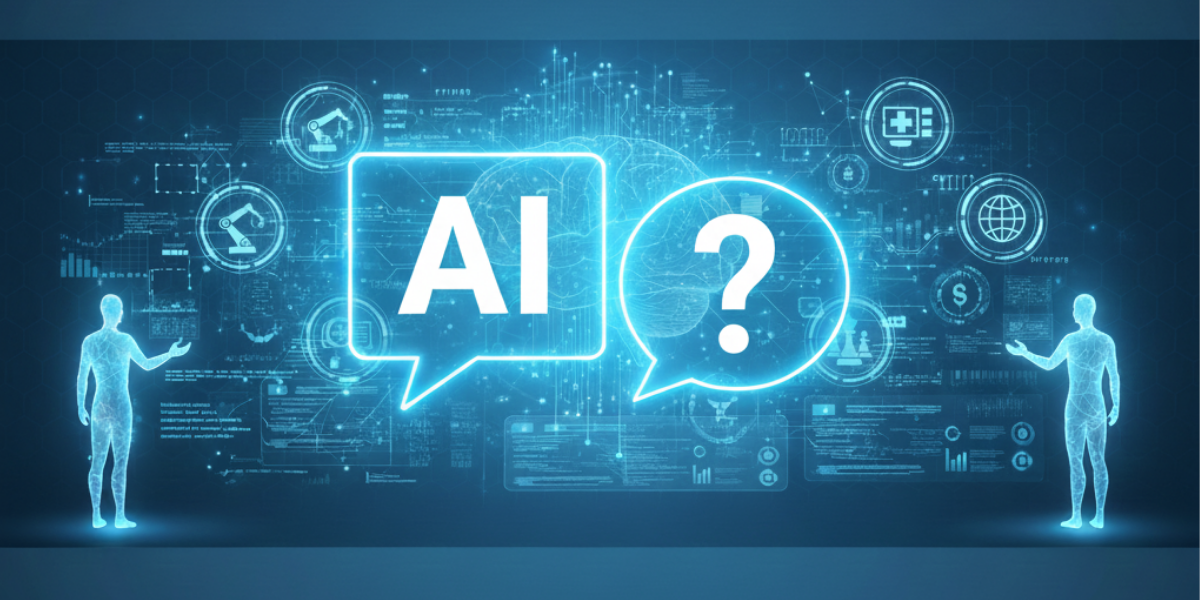
What is AI? A Beginner’s Guide to Artificial Intelligence in 2026
If you’ve ever heard people talk about AI and thought, “I kinda get it… but not really,” this guide is for you.
We’ll walk through what AI is, how it began, why everyone’s suddenly talking about it, the types you’ll hear about, how it affects your daily routine, and what all this means for you in 2026.

Definition of AI
Artificial Intelligence (AI) is the field of computer science that builds systems capable of learning from examples, noticing patterns, and making predictions or decisions, performing tasks that normally need human thinking.
It’s not magic.
or a digital brain with feelings.
It’s math + data + computing power to predict and generate results.
A helpful way to picture it:
Imagine you’re teaching a student. Instead of giving them every rule, you show them examples, let them practice, and they gradually figure things out. AI works the same way, except the student is a machine.
You’ve already met AI in your daily lives, reading articles written with AI or seen artworks and videos generated with them. Sometimes, AI is used in ways we don’t even realize, such as in facial recognition and text translation.
For instance, when Gmail automatically filters spam, it’s AI learning from patterns in past emails

History of AI
AI has deeper roots than most expect. Researchers began exploring the idea of “thinking machines” back in the 1950s.
Early progress was exciting, but computers at the time were too weak, and data was limited. That led to the first major slowdown known as an “AI winter” (Crevier, D. (1993). AI: The Tumultuous History of the Search for Artificial Intelligence.).
As computing power grew and more data became available, progress picked up again.
The breakthrough moment?
Machine learning and deep learning techniques that let systems improve by analyzing massive datasets and adjusting themselves using powerful hardware like GPUs (Nature).
By the 2010s, AI quietly worked behind the scenes in search engines, maps, ads, and phones.
A landmark achievement in AI came in 2016 when Google’s AlphaGo, a deep learning and reinforcement learning system, defeated Lee Sedol, one of the world’s top Go players.
Go is an ancient board game with more possible positions than atoms in the universe, making it extremely difficult for traditional computers.
AlphaGo’s victory demonstrated that AI could master highly complex strategic tasks by learning patterns from vast datasets and improving through self-play, marking a major milestone in machine learning and AI capabilities.
Then in the early 2020s, conversational models like Chat GPT burst into the mainstream, making Artificial Intelligence feel “human” for the first time.
Read the full Article on AI History Here >
Types of Artificial Intelligence?
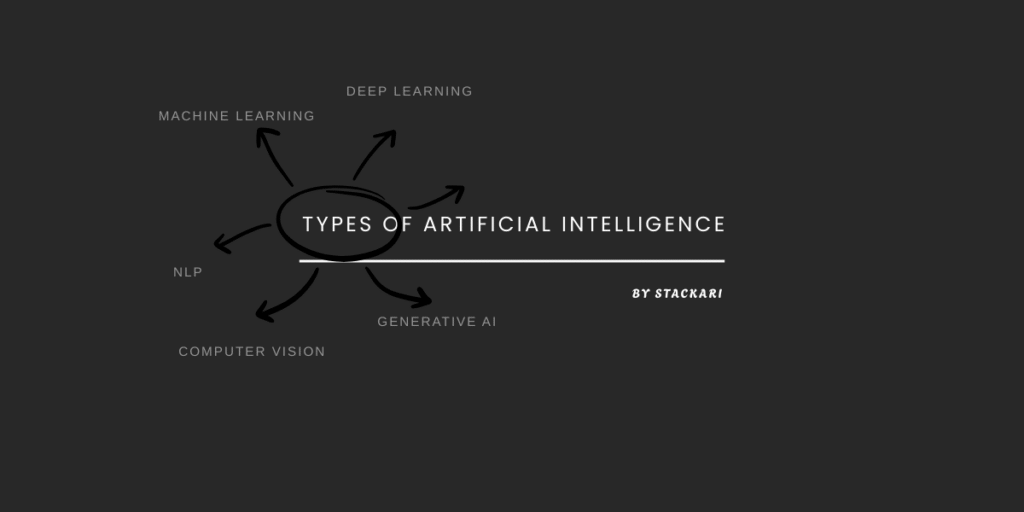
When people talk about AI, they often mention terms like machine learning, deep learning, Natural Language Processing (NLP), or generative models.
These can feel overwhelming at first, but they’re really just different approaches to teaching computers how to understand data or create something useful from it.
Machine Learning (ML)
Machine learning is the idea that instead of programming every rule manually, we let computers learn patterns from examples.
For instance, instead of writing code that defines what every spam email looks like, we show the system thousands of emails marked “spam” or “not spam,” and it learns the difference through probability and pattern recognition.
That’s ML learning from data rather than from fixed instructions.
Examples of ML: PayPal’s fraud detection system uses machine learning to analyze millions of transactions in real time. It compares incoming activity to known fraud pattern unusual locations, inconsistent spending behavior, or rapid repeat transactions and flags anything suspicious.
Deep Learning (DL)
Deep learning is a more advanced type of machine learning that uses a structure called a neural network.
You can imagine it as layers of tiny decision-makers, each looking at a small detail and passing it forward.
These networks get “deep” because they have many layers, and that depth allows them to understand very complex patterns, like what makes a face look like a face or what makes a sentence sound natural.
Examples of DL: Facebook/Meta’s image recognition models use deep learning to detect faces, objects, and scenes in photos. The model learns from billions of labeled images and recognizes complex features like shapes, lighting, angles, and textures.
Natural Language Processing (NLP)
NLP is all about teaching computers to understand and generate human language.
When you talk to a chatbot, ask a smart speaker a question, or translate text into another language, when using NLP. It helps AI understand context, grammar, tone, and meaning, so the experience feels more natural and conversational.
Example of NLP:
ChatGPT understands questions and generates human-like responses
Google Translate converts text between languages while preserving tone and meaning
Grammarly evaluates grammar, clarity, and writing style
Computer Vision
Computer vision helps AI make sense of images and videos. It’s what allows your phone to recognize your face, lets cars detect pedestrians, and enables apps to read handwritten notes.
The AI learns by analyzing millions of pictures until it can reliably identify patterns – like shapes, edges, or textures – and assign meaning to what it sees.
Example of Computer Vision: When your smartphone unlocks with Face ID, computer vision analyzes facial features eye distance, bone structure, and shape before confirming your identity.
Generative AI
Generative AI is the category responsible for creating new content. That could be text, images, music, video, or even computer code. These models don’t just apply rules they learn from enormous datasets and use that knowledge to generate original material.
Tools like art generators, video creators, and large language models fall under this category. They feel creative because they combine learned patterns in ways that produce something new.
Example of Generative AI:
DALL·E creates original images from text descriptions
MidJourney generates artistic visuals and concept art
RunwayML generates AI-powered videos
Suno generates music from prompts
Together, these fields form the practical backbone of modern AI. Many real systems use more than one. For example, a voice assistant uses NLP to understand user and ML to predict what you mean.

How Artificial Intelligence Work
Similar to how humans learn, AI take it step by step to form actions.
Data → Model → Training → Inference → Monitoring,
Data: Learning material for the AI
Every AI system needs to learn from examples. These could be images, written text, voice recordings, transaction histories, or anything else representing the real world. Data is the foundation because the AI uses it to learn what patterns exist.
Model: The structures that learns patterns
A model is a mathematical framework designed to recognize patterns within the data. Think of it like a template that becomes more accurate as it sees more examples. The model starts with random assumptions and slowly becomes smarter as it learns.
Training: the learning process
During training, the AI model looks at countless examples, compares its and try to guess the correct answers, and adjusts itself repeatedly.
Inference: AI taking action
Once training is complete, the model can start making predictions or producing output. This step is called inference. Just like how Ai responds to your questions.
Monitoring and iteration: keeping the AI accurate over time
AI doesn’t stay perfect forever. New types of data appear, patterns shift, and user behavior changes. That’s why good AI systems are monitored and updated regularly. They get retrained with fresh data, corrected when mistakes show up, and improved as technology advances.
This learning cycle forms the foundation of everything you see in AI today – from recommendation engines to conversational models.

Myths of Artificial Intelligence
Myth: AI thinks like a human.
AI does not think, feel, or understand the way people do. It analyzes enormous amounts of data available and identifies patterns that help it guess what should come next. There are no beliefs, emotions, intentions, or personal experiences behind its answers.
In Reality, AI can produce believable yet wrong outputs (“hallucinations”).
The phenomenon is well-documented: language models sometimes generate statements that sound confident and plausible but are factually incorrect or entirely made up (OpenAI).
Myth: AI will replace every job.
AI is good at handling repetitive and predictable tasks. While jobs that involve judgment, creativity, relationship building, or physical interaction will be harder to replace.
Thus, AI often becomes a tool that supports people rather than a full replacement.
Example:
Research shows that AI-assisted radiology report generation can significantly cut reporting time without increasing clinically significant error rates (PubMed).
In healthcare: tools like FxMammo help radiologists by analyzing mammogram images to flag possible cancer signs speeding up screenings and reducing workloads (CNA).
Myth: AI is always unbiased.
AI learns from the information it is trained on. If that data contains unfair patterns or incomplete perspectives, the system can become bias. This is why responsible AI development includes checking data quality, auditing models, and human oversight to ensure fair results (Nature).
Myth: AI is always correct
In reality AI can make mistakes and generate inaccurate outputs.
AI systems, including large language models and generative tools, make predictions based on patterns in data rather than understanding the world. This means they can confidently produce wrong or misleading answers, especially when encountering unusual, ambiguous, or incomplete information.
Example: GPT‑3 and similar models have been known to invent citations, dates, or facts that sound plausible but are entirely false. Even image-generating AI can create objects in impossible arrangements or unrealistic scenarios if prompted incorrectly. This shows that AI outputs always require human verification, especially in high-stakes contexts like healthcare, law, or finance. (Source: OpenAI Research on Hallucination, OpenAI)
Takeaway: Treat AI as a tool to support human judgment, not as an infallible authority.
Myth: AI can replace creativity
In reality AI assists creativity but does not replace human imagination.
AI can generate text, music, images, or designs by learning patterns from existing content, but it does not originate truly novel ideas or understand context in a human sense. The “creativity” of AI is derivative: it recombines learned elements to produce outputs that appear creative.
Example: Tools like DALL·E or MidJourney can generate impressive art from text prompts, but the concept and intent behind the art still originate from the human user. Similarly, GitHub Copilot can suggest code snippets, but it cannot independently conceptualize a full software project or understand business requirements
(Source: AI is not truly creative — Springer; Journal of Creativity research on AI and humans).
Takeaway: AI is a creative partner, it can inspire, speed up workflows, and offer new ideas, but human insight and decision-making remain central to innovation.

Risk and Ethical Issues with Artificial Intelligence
AI are useful and powerful tool, but it has limitations.
Bias and fairness problems
As mentioned, AI learns from data, and if the data contains biases, it can unintentionally gather unfair results.
For example, if a hiring model is trained mostly on resumes from one demographic group, it may unfairly favor that group. Fairness relies on careful data selection and testing.
Hallucinations or incorrect output
Generative AI can sometimes produce information that sounds correct but is actually wrong.
This happens because it predicts what “should” come next based on patterns rather than checking facts. It doesn’t mean the system is broken, just that you will have to check on the facts at times.
Privacy concerns
Many AI systems rely on personal or sensitive data. Without clear safeguards, that data can be misused or exposed.
Responsible design puts strict boundaries around how data is collected, stored, and used.
Overdependence on automation
If organizations automate processes without proper checks, they risk making decisions they can’t fully explain or control. Blind trust in AI can lead to errors that are hard to detect until they cause real problems.
Do your due diligence of the information generated by AI. Read through and cross reference from reliable sources.
Copyrights
Copyright is a growing concern as AI systems can generate text, images, music, and code that resemble existing works.
As these models learn from large collections of online content, and mergers them for generation, it complicates the copyright licensing to use the content for generation.
This raises questions about who owns the final result, whether creators were fairly compensated, and how to prevent AI from unintentionally reproducing protected material.
Guidelines are still unclear, and data practices are not yet transparent. Because of this, it is advice to use AI responsibly and do checks to reduce legal and ethical risks.
How Businesses Build AI
If you ever want to build an AI tool of your own here are the layers of building one.
Data layer – gathering and preparing information
This layer involves collecting data, cleaning it, labeling it, and storing it in a safe, accessible way.
If the data is messy or incomplete, the entire AI system will struggle, so this layer is often the most labor-intensive.
Model layer – creating and refining the Artificial Intelligence logic
Once the data is ready, teams train models that can recognize patterns or perform tasks.
This could involve building a model from scratch, fine-tuning an existing one, or using a pre-trained foundation model.
Infrastructure layer – powering and hosting Artificial Intelligence
AI models need strong computing resources, especially during training.
Hardware and cloud systems – like GPUs, databases, and servers are required to run AI efficiently and respond quickly to users.
Application layer – the tools people interact with
This is the part users see. It could be a chatbot, a fraud-detection dashboard, a writing assistant, or an image generator. The application layer uses the underlying model to create a practical, user-friendly product.
Governance layer – ensuring safety, privacy, and compliance
This layer includes everything related to responsible AI:
Monitoring accuracy, checking for bias, implementing privacy controls, and meeting regulatory standards. It keeps the system trustworthy and aligned with ethical guidelines.
AI is not just one model; it’s a whole ecosystem that must work together smoothly.
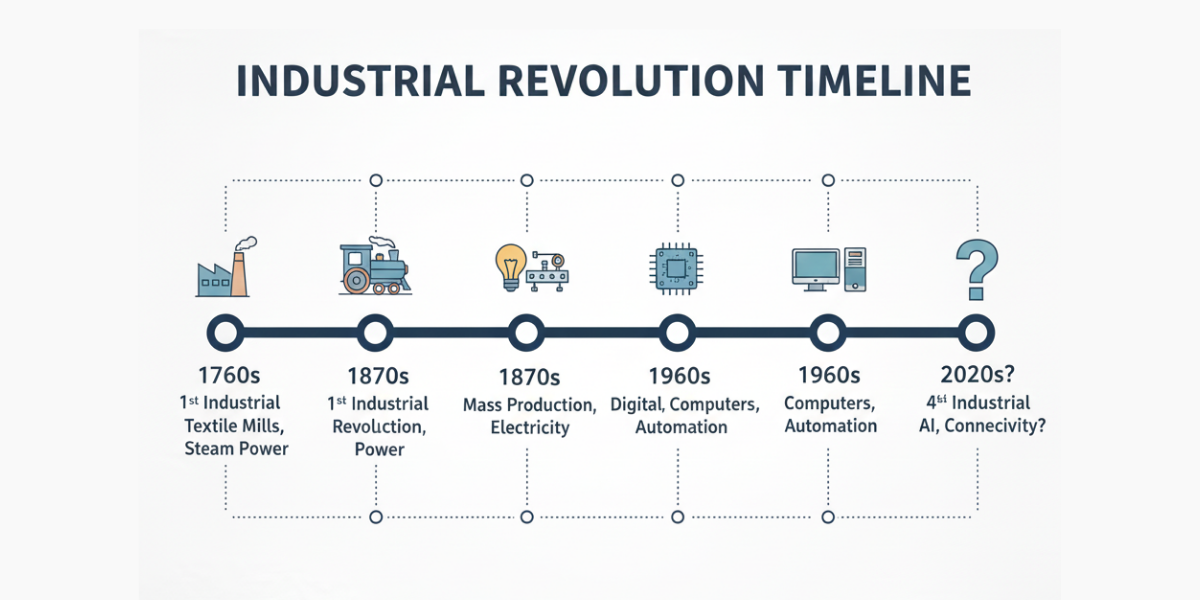
The AI Revolution
AI is becoming one of the 4 technological revolutions.
A “revolution” in this context refers to a major technological shift that fundamentally changes how society works. It’s not just a new invention – it’s a wave of breakthroughs that reshape daily life, jobs, communication and industry.
Each technological revolution introduces tools that dramatically amplify human capability.
The Industrial Revolution multiplied physical power through machines.
The Digital and Internet Revolutions multiplied information processing and global connectivity
The emerging AI Revolution is beginning to multiply cognitive ability by giving machines the capacity to learn, reason, and create. These revolutions aren’t small upgrades; they are turning points that redefine entire eras of human history.
Read More about the AI Revolution >
Learn More About Artificial Intelligence
Hands-on experience
Try Our Free AI Tools from Ai tool directory – Ai Stack
Stay Informed
AI evolves quickly. Follow AI Stacks AI Update through Emails and socials.